The reductionist analytic modeling recipe goes like this:
- Pick a system to study, choosing a boundary around a region in the world and mentally sectioning it off - everything inside that boundary is the system and everything outside is the environment.
- Simplify the system by picking a few details to pay attention to, ignoring everything else. Divide the system into components with defined states and define interactions between components. Some parts have defined interactions that reach through the boundary defined in step 1, and interact with the environment.
- Assemble those parts back into the whole, building up complexity by computing how the various combinations of states of the various parts interact with each other.
Step 2 simplifies while step 3 complexifies. Step 2 is semantic while step 3 is syntactical. If the results from step 3 successfully predict the behavior of the system, then the simplifications in step 2 are said to capture the essential details of the problem.
By thinking of the work accomplished by analysis as due to these three types of work, you could find the limiting reagent and spend more time on that. The analytic engine you are improving could be personal, collective, flow or even batch-oriented.
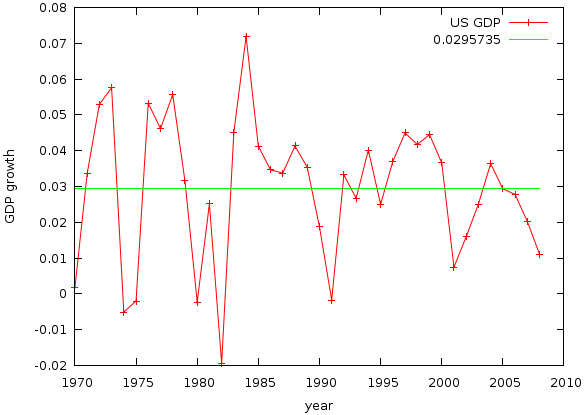
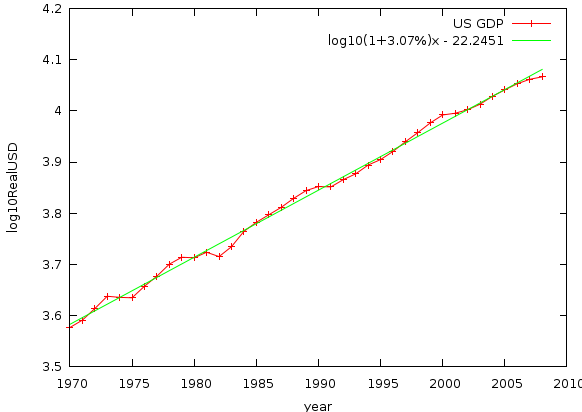 I was surprised that I've never known this before. The reason, I think, is that usually we see plots of year on year GDP growth, which look like this: