Stockholder Perks
This came in the mail today:
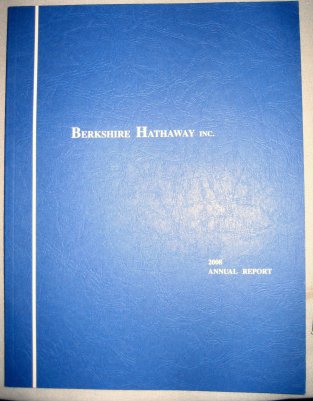
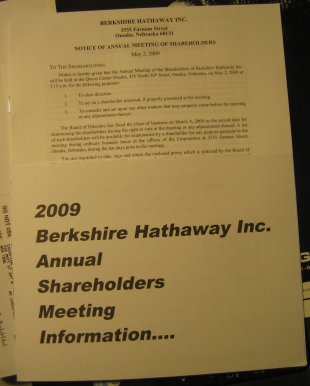
This came in the mail today:
Nominal - numbers are either the same or not
Ordinal - if different, one number is bigger than the other
Interval - differences in numbers can be compared
Ratio - zero is a significant point
The properties described are nested - nominality is needed for ordinality, which in turn is needed for interval-ality, in turn needed for ratio-ality.
Anything interval level and above is considered quantitative. Most qualitative measures serve only nominal function, i.e. whether something is the same or not.
More formally: http://en.wikipedia.org/wiki/Level_of_measurement [HT: Soo Mei]
The language for this one comes out of physics. It is a general phenomenon seen in many places. In chemistry the words used are kinetics / thermodynamics.
Equations of Motion - When we understand what causes change in a system, we are able to predict what the state of the system will be in the future given its state now. The rules which dictate the change are called equations of motion, or EOM.
Information Loss - Sometimes, EOM leak information. This means that where it was possible to distinguish between two possible worlds at time t1, you find them indistinguishable at some later time t2. Funnels are a good example of this - when you use a funnel you are able to care less about where the liquid is initially, because it all goes to the same narrow end.
Transience / Steady State - When an EOM discards all the information it has, no matter where you start out you will end up at the same place. Most of the time, however, EOMs don't lose all the information, and the movements which are subject to rubbing out, or friction, are called transient movements, while whatever persists in the long run is called the steady state.
2 comments
Remember the other "Stockholder" you worked on before?
Stockholder weights >_